
No Login Required
Reading the Citizen's Daily Brief never asks for a login, and every surface is free — daily, weekly, archive, FICINT. Support is voluntary and web-only, gets you no extra content, and deliberately routes around the App Store.
Open the Citizen’s Daily Brief on the web and look for the login button. There isn’t one. No “sign up free” banner, no account wall, no email box that slides up after thirty seconds to learn who you are before it’ll let you read. You land on today’s brief and you read it.
That absence is the most deliberate thing about the product. It says what the CDB is meant to be: a shared briefing anyone can read, that asks nothing of you in return.
The Whole Thing Is Free
Everything the system publishes is free, and I mean the whole catalog. The daily brief — five to nine assessed items with trust signals, evidence panels, source attribution, confidence levels — runs free Monday through Saturday. The Weekly Assessment that carries Sunday, the longer piece that pulls the week’s threads into trend analysis and a couple of deeper dives, is free. The archive going back to the first edition is free. The FICINT dossiers, the fictional-intelligence experiments that read like declassified case files, are free. So is the podcast feed.
No item is blurred behind a “subscribe to read” overlay. No evidence panel is locked. There’s no premium tab.
This matters most for the daily brief, whose whole value is that it’s a common reference — everyone opens the same one. A daily brief that showed paying readers a fuller version would stop being shared; it would be a tiered product wearing a civic face. So that one is settled: the brief everybody reads is the same brief, and it isn’t for sale.
So Where’s the Money?
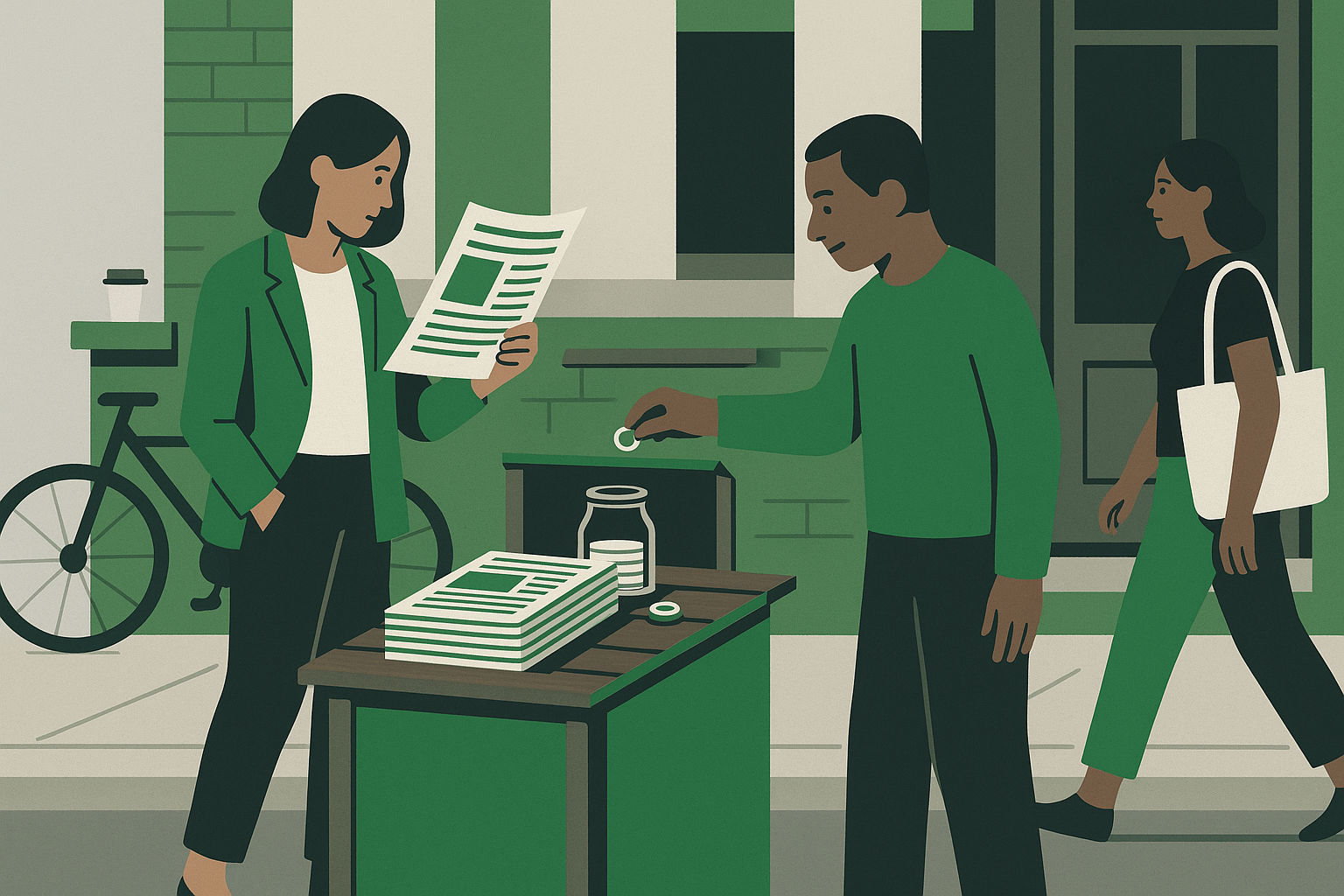
Running the whole operation costs about sixty dollars a month, nearly all of it model inference. Readers who find it useful can cover that, the way you’d chip in to a public radio station during a pledge drive. Support is voluntary, and it lives on the web, at citizensdailybrief.org/account. Here’s the part that catches people off guard: the iOS and Android apps have no way to take it — to chip in from the app, you step out to the browser.
Making It Harder to Pay Me
That’s on purpose, and it cost me the easy version to do it.
The frictionless move is an in-app “Support” button wired straight into Apple and Google’s purchase systems. One tap, Face ID, done. I don’t use it. Apple and Google take up to 30% of in-app payments, and their rules reach further into what counts as a “purchase” than most people expect. Send support to the web through Stripe instead and that cut stays with the project. It also keeps two app stores’ content rules out of the internals of a civic product.
Under the practical reason sits a better one. The instant support runs through the app as a purchase, the app has to know who paid. That means entitlement checks, a paid-versus-free fork in the code, and a standing little temptation to let the free side go thin so the paid side looks worth the money. Keep the money on the web and the app never learns who supports it. It has nothing to gate, so it gates nothing.
Supporters get no extra content. There’s no early edition, no members-only dossier waiting behind a sign-in. What a supporter gets is a receipt and the brief kept running for everyone, themselves included. When I write about it I try to say precisely that: the Daily Brief is free, and if the work is useful to you, you can help keep it going.
It’s the shape of Letters from an American, Wikipedia, NPR, ProPublica. The writing is the public good. Paying for it is a separate choice you make because you want the thing to keep existing, not because you’re buying your way past a wall.
What the Login Is Actually For
If reading never needs an account, what’s the sign-in for? Two narrow jobs.
On the web, supporters sign in so their support follows them across devices and their receipts land somewhere durable. That account manages support and nothing else — no profile, no saved preferences, no personalization engine quietly warming up in the background. We’re glad you’re reading, and glad to hear from you. We just have no interest in getting into your business the way an attention-economy app does.
In the app, you can sign in with Apple or Google if you want the morning push notification, since a push has to attach to a device a real person owns. It’s optional. Skip it and the app still opens straight to the brief.
Reading — daily, weekly, archive, FICINT, podcast — never asks. On any surface, on the web or in the app.
What I Do and Don’t Track
The website runs exactly one analytics tool, and it’s about the lightest one going: GoatCounter. It counts pageviews and referrers, sets no cookies, collects no personal data, and builds no profile that trails you from page to page. So I can see that a brief drew some number of reads, and that a few visitors arrived from a link someone posted — but not who you are, not what you read before or after, not how long any item held you. Aggregate tallies at the door, and that’s the ceiling. I could run heavier tooling; I’ve chosen not to.
The native apps go a step further than that, and I’d sooner say so than let a tidy slogan paper over it. They use Mixpanel to see how the apps get used — which screens, how often — behind a switch in Settings that actually stops the events from firing when you flip it off. It doesn’t watch your reading. There’s no per-item tracking, no behavioral profile, nothing sold or handed to anyone. They aren’t built to learn what you read most so they can show you more of it. It’s purely product analytics, not just crash logs, and calling that “no tracking” would be exactly the kind of small overstatement this whole project is built to avoid.
There’s a story, probably apocryphal, about a fan who stopped Bob Dylan on the street. “You don’t know who I am, but I know who you are.” Dylan: “Let’s keep it that way.” That’s roughly the arrangement we’re after. You know the brief; the brief has no interest in working out who you are.
The Levers I Left Unplugged
None of this is free to me in the currency that grows a product. I can’t A/B test a headline against readers I refuse to measure. There’s no funnel to tune, because no one’s being converted. I can’t send a “we miss you” email, because I never took your address, and honestly, chasing you back isn’t the kind of relationship the CDB is built for. Every one of those is a lever other products pull hard, and I’ve unplugged them deliberately.
The wager is that a civic briefing earns its readers by being trustworthy, a little boring, and the same for everybody — and that the machinery of growth is the same machinery that would corrode the trust the briefing runs on. So there’s no wall to get past. Just today’s brief, and a choice that stays entirely yours: whether to help pay for tomorrow’s.
The Citizen’s Daily Brief is a free daily intelligence briefing from Stalefish Labs.
Want more like this?
Subscribe to get new posts from the lab delivered to your inbox.
or grab the RSS feed