
The Cracker Barrel Edition That Almost Was
Cracker Barrel's buyer sat down with me in 2002 to look at a card game. I designed an exclusive Down Home Edition for them — table toppers, custom card content, the works. Then the deal went quiet.
I’m a native Nashvillian, which is increasingly rare these days. I grew up with Cracker Barrel as a road trip staple, complete with the vintage candy in the gift shop, the triangle peg game, and endless biscuits. The company is based in Lebanon, Tennessee, half an hour east, and after getting an initial soft reply via a cold letter writing campaign about them carrying our card game Tall Tales, I learned I had a surprisingly direct connection to the top. I ended up getting a real sit-down, inside the building, with the founder and CEO himself, to show him the game. A truly rare opportunity for someone with zero marketing experience trying to launch a new game.
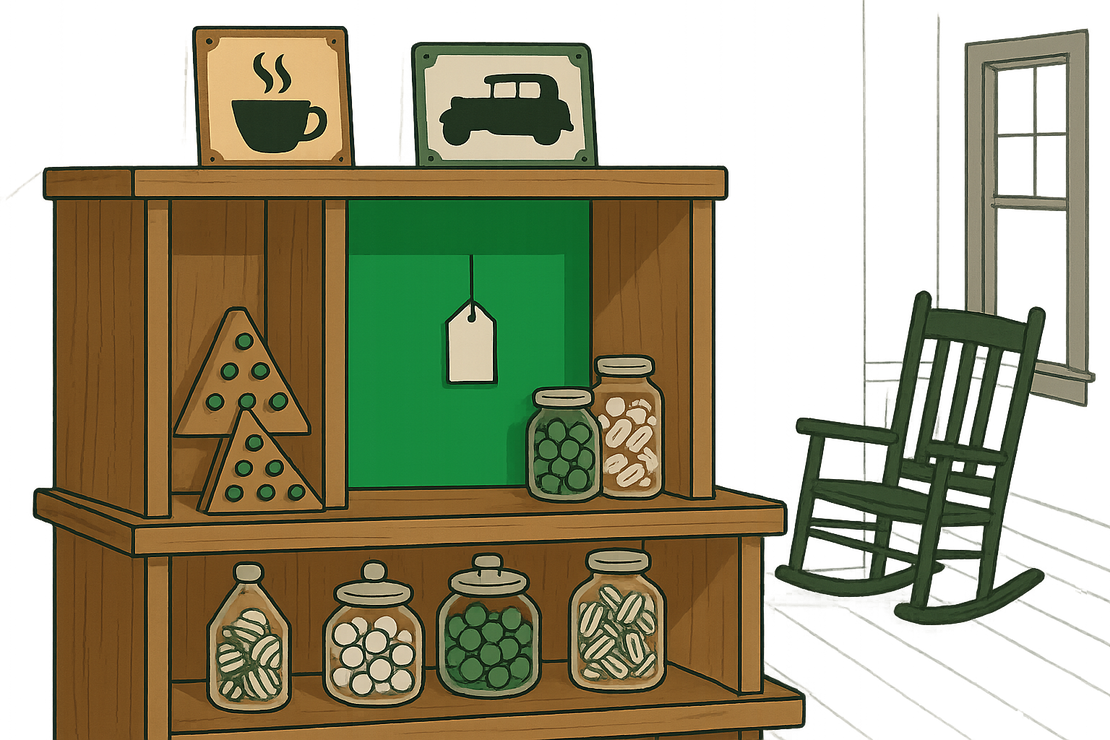
I brought a prototype of our $12.95 Tall Tales Pocket Edition, and entered the foyer of Cracker Barrel’s then corporate HQ. At that time their HQ was a restored 10,000 square foot mansion called The Mitchell House, which was originally part of the Castle Heights Military Academy. I had somehow managed to get a sit down with their founder and CEO, and Castle Heights graduate, Dan Evins, who was very kind and seemed to maybe appreciate the pluckiness of me trying to pitch a locally created product directly to the top. We talked a bit and he eventually passed me on to their buyer, Karen Smith. That meeting, in October 2002, is where the story starts to unravel. She named the problem with selling Tall Tales into Cracker Barrel without hedging. Their retail floor runs on nostalgia: tin signs, wooden toys, the candy your grandparents’ grandparents ate, the rocking chairs out front, a healthy dose of UT Vols big orange paraphernalia. Tall Tales, with its stylized cryptid creatures, weird-but-true trivia, and its faintly mischievous voice, read as too modern and a shade too edgy for that shelf. She wasn’t knocking the game, just its place on that particular shelf, and she had it right.
Most pitches end at the no. This one turned into a design brief. I’m a designer, so what I heard in her critique was an assignment. Instead of leaving I offered to build Cracker Barrel their own version of the game, and she was open to it, so I drove home and did it. Tall Tales Down Home Edition: artwork redrawn in a warmer, folksier register, card content rewritten toward their audience, a “Cracker Barrel Exclusive” badge on the front of the box. I dropped the price from $12.95 to $9.95, with a $5.00 wholesale cost, to land where their shoppers expected an impulse buy to sit. The margin was painfully thin. Honestly, at those numbers we’d have run at a loss for a while, until the print quantities climbed enough to bring the unit cost down.
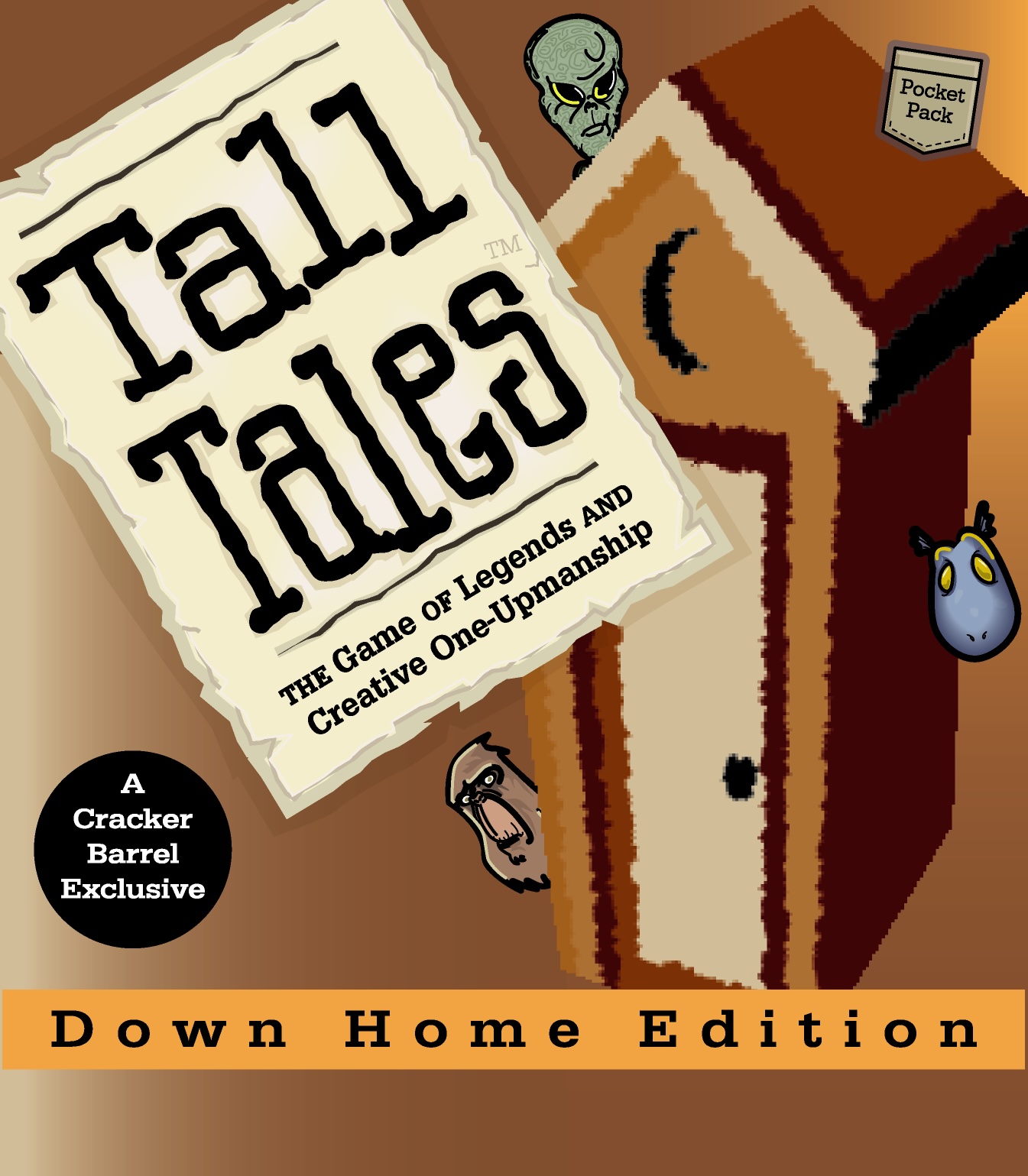
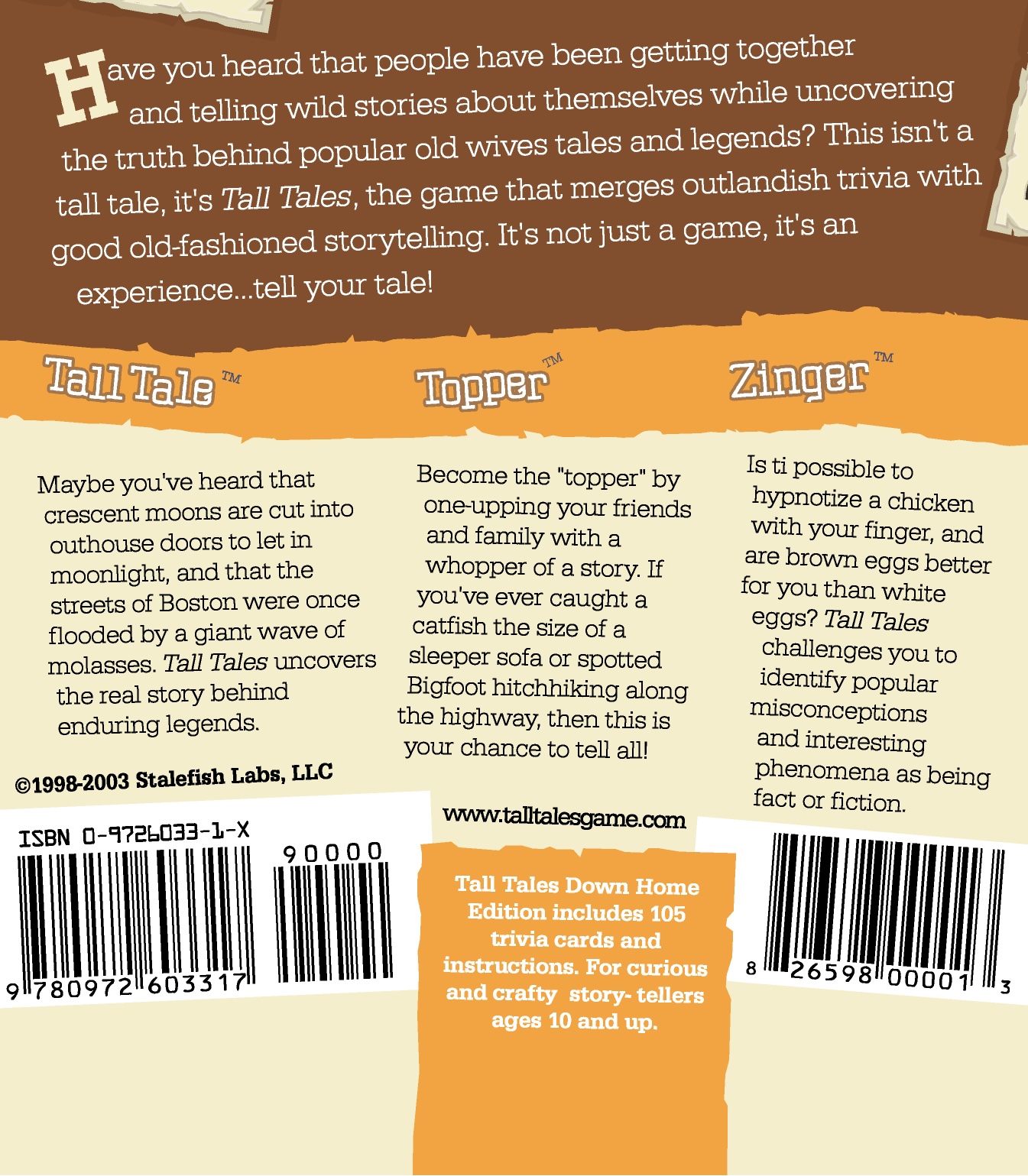
By the time I came back with the follow-up pitch, in November 2003, I’d changed the words around it too. The first time, I’d sold a game. Now I called it “family entertainment akin to your books on tape” — borrowing a category Cracker Barrel already stocked and understood, the audiobooks people bought for long drives. Same product. I’d just learned to describe it in their language. And it wasn’t marketing B.S.; our game really was the perfect road trip game. Still is, actually.
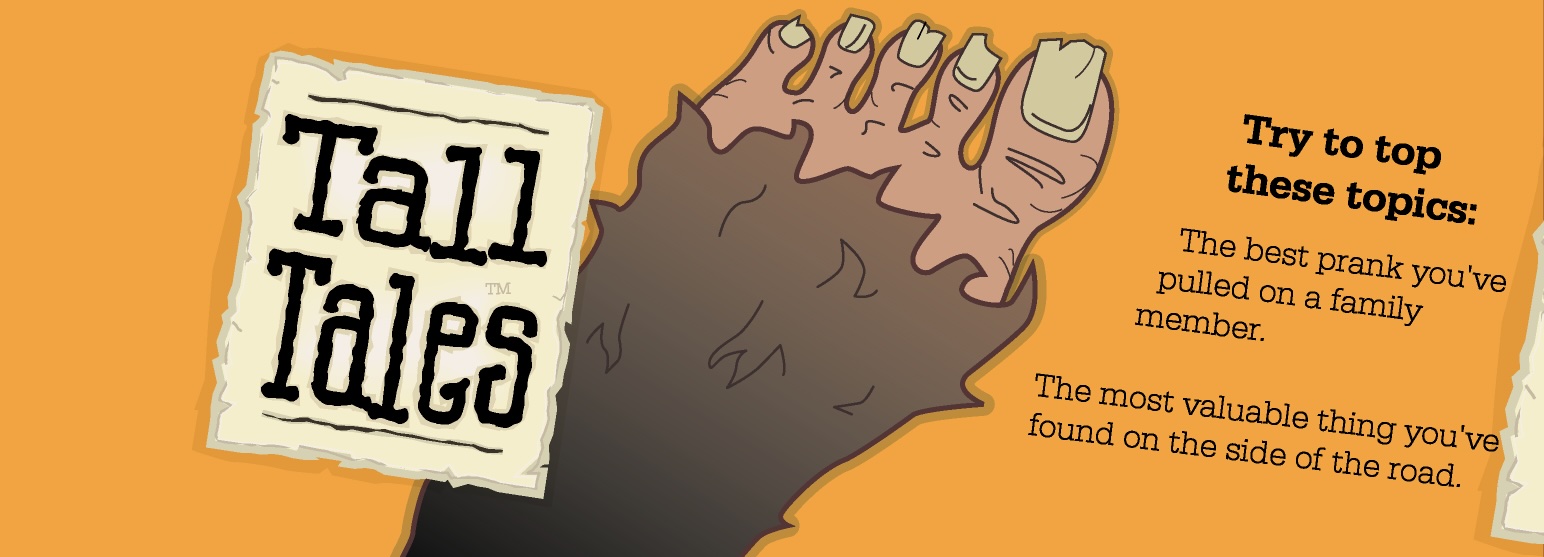
The piece I was proudest of never ran. I designed table-topper playable ads, the little tent cards that stand between the salt and pepper and the peg board game, so a family eating biscuits waiting on their entrees could read about the game, play a sample card, and then grab a copy on the way out past the register. The placement was the whole idea: catch people in the idle fifteen minutes before the food arrives, in the exact building where the product is for sale. It seemed like a no-brainer.
Then it went the way these things sometimes go: without warning, the buyer pulled the plug. No drama, no explanation that made it into the file. Down Home went from “let’s do this” to silence, and I never got the post-mortem. A budget, a reorg, a category reset, a champion who moved on — one of the ordinary ways a deal dies inside a big company. I’ll never know which one it was.
The deal falling through stung, but deals fall through, and that’s not the part that stayed with me. The design pivot did. Re-imagining Down Home as its own edition forced me to build a working model of a customer I’d never pictured — “the Cracker Barrel shopper” — and design backward from her. Where would she be standing the first time she saw the box? What price would feel like a treat instead of a decision she had to weigh? I was a kid doing brand strategy with none of the vocabulary for it, only because a buyer had told me no in a way specific enough to answer. I don’t think I missed by much.
Oddly, all these years later, the Down Home Edition would still fit Cracker Barrel. The art still sits in the project folder, a few directories over from the edition that actually shipped — a whole game, tailored to a restaurant chain, that exists only as files. The box that almost was, parked next to the box that was. You win some, you lose some, you hopefully learn a little either way.
The remaining copies of Tall Tales Pocket Edition are here.
Want more like this?
Subscribe to get new posts from the lab delivered to your inbox.
or grab the RSS feed