

This Happened, or It Will
A musician we'd loved for decades recorded The Velveteen Rabbit for my wife. What it did to her that night is the reason Sojourn, our read-aloud bedtime-story app for grownups, exists at all.
Frank Reader sings for the Trashcan Sinatras, a Scottish band my wife and I have loved for decades. A few years ago he ran one of those fan campaigns: a small pledge, and he’d record himself reading a children’s book aloud. Most people asked him to read for their kids. I asked him to read for my wife.
He was a little thrown, then delighted. The book was The Velveteen Rabbit, Margery Williams’ 1922 story about a stuffed rabbit that becomes real by being loved. Technically a children’s book. Also the source of one of the more devastating sentences anyone has written about what love costs and what it gives: “Real isn’t how you are made. It’s a thing that happens to you. When a child loves you for a long, long time, not just to play with, but REALLY loves you, then you become Real.”
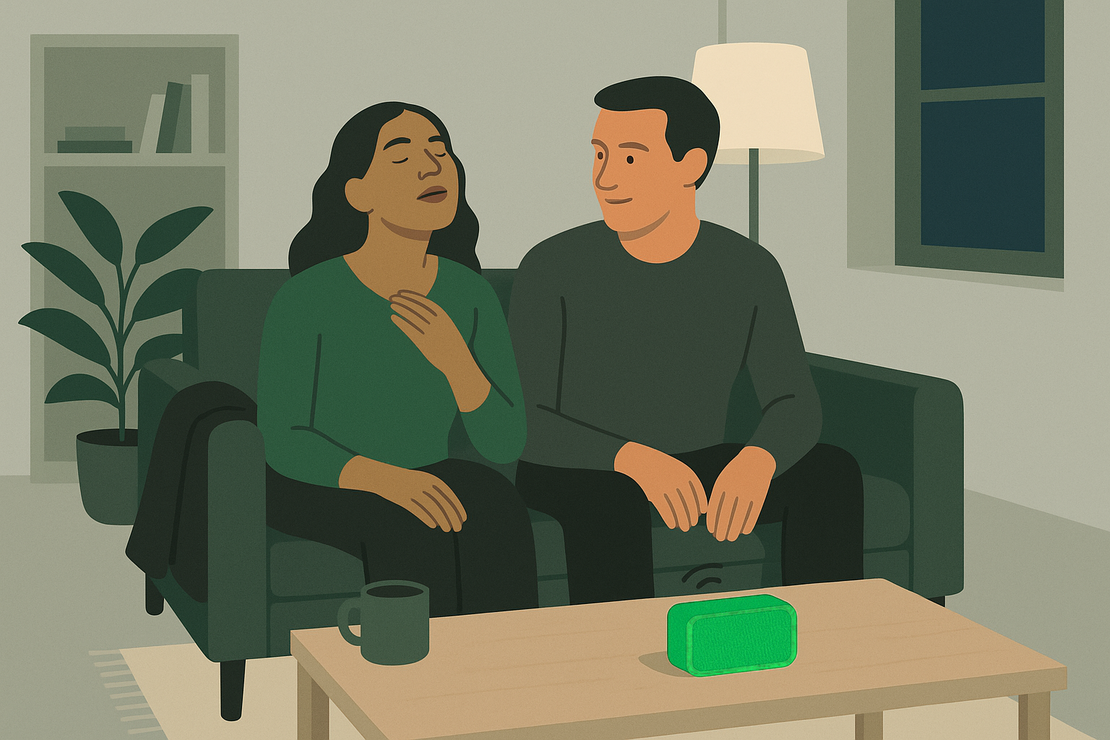
My wife and I plugged in the memory stick with Frank’s recording and sat and listened together. Flattered is the word, in the old full sense: someone had given an evening of his life to reading her a story, in a voice she’d loved for years, and she was a little undone by it. Not amused. Not embarrassed. Flattered.
So was Frank, as it turns out. The undone part, anyway. The book was his own choice, but he confided later that he hadn’t read it in years, sat down to record it cold, and was shocked at how heavy it turned out to be. He had forgotten the brutal thing sitting just behind what looks on the surface like a cute story about a stuffed rabbit. She was the one being read to; I only watched. Nothing I’ve read about design since has taught me as much as her face did in those few minutes.
I’ve told the two-sentence version of this before, in an essay about the test every Sojourn story has to pass. This is the long version, and how a children’s book in a voice she loved turned into a bedtime story app.
Reading, and Being Read To
Reading a book and being read to are not the same act. Everything that follows lives in the gap between them.
When you read, you’re in charge. You picked the book, you set the pace, you stop when you want, you reread the line you missed. When someone reads to you, you’ve handed all of that over. You’re not steering anymore; you’re receiving. You can’t go back a line. You can’t skim. You’re carried at whatever pace the reader chooses, toward whatever’s coming, with your eyes closed. You’re effectively being held. It’s the posture of a child being tucked in, and for an adult that posture has nearly gone extinct.
It disappears completely, and nobody notices it go. Children get read to. Hospital patients sometimes do. Everyone else stops somewhere around the end of grade school and never starts again. We spend our adult days in command of everything: the playlist, the route, the calendar, the channel. Letting another person decide what happens next — and trusting them with it — becomes something we only do in a barber’s chair, or under anesthesia. No wonder it lands as intimacy when it comes back. Surrender always does.
What I started to suspect, watching my wife receive that recording, is that a lot of adults carry a hunger for exactly this that they’ve never named. Many have never had it as adults. Some never had it as children at all. The part that took me a while to understand is what they’re actually hungry for, and it isn’t to be read the books they’d pick for themselves. The literary novel, the genre thriller, the clever adult narrative all reward a reader in control, an active mind doing its share of the work. Hand one to someone who has surrendered the reins, eyes closed in the dark, and it’s the wrong tool. Too much to track. Too much to admire. Admiration is an awake person’s posture, and the whole point is that this person is letting go.
Sleep apps noticed the gap and filled it with audio you press play on and listen to alone. The difference between that and what I wanted is the reason I ended up building an app instead of a podcast. A recording is content. A person reading to you is a relationship, briefly made audible.
Fairy Tales for Grownups
What the surrendered listener wants is closer to what made bedtime stories work in the first place. Wonder, and the sense that someone is taking care of you by telling you a story. This is not a case for reading grown adults picture books. Stories with the register of fairy tales: plain-spoken, mythically resonant, carrying truths that only land once you’ve lived enough to recognize them. Too direct to survive a literary workshop and too true to forget. Fairy tales for grownups.
Sojourn is what I built out of that night. It’s an app where one person reads a story aloud to another, the story unfolds across several evenings, and the reader quietly steers the path through choices the listener never sees.
That last part matters more than it sounds. The reader is doing something. At each turn they’re handed a choice, usually a small moral or emotional fork (she reaches for it / she leaves it where it is), and they pick, thinking about the person on the pillow next to them. She’d reach for it; she’s always gone toward things. The listener experiences none of the machinery. They hear a seamless story that happens, mysteriously, to fit them, because someone who loves them has been making small decisions about who the character should be. One person does the work of knowing and choosing. The other does the work of trusting and receiving. Both of those are acts of intimacy, and that’s the only trick the product is pulling.
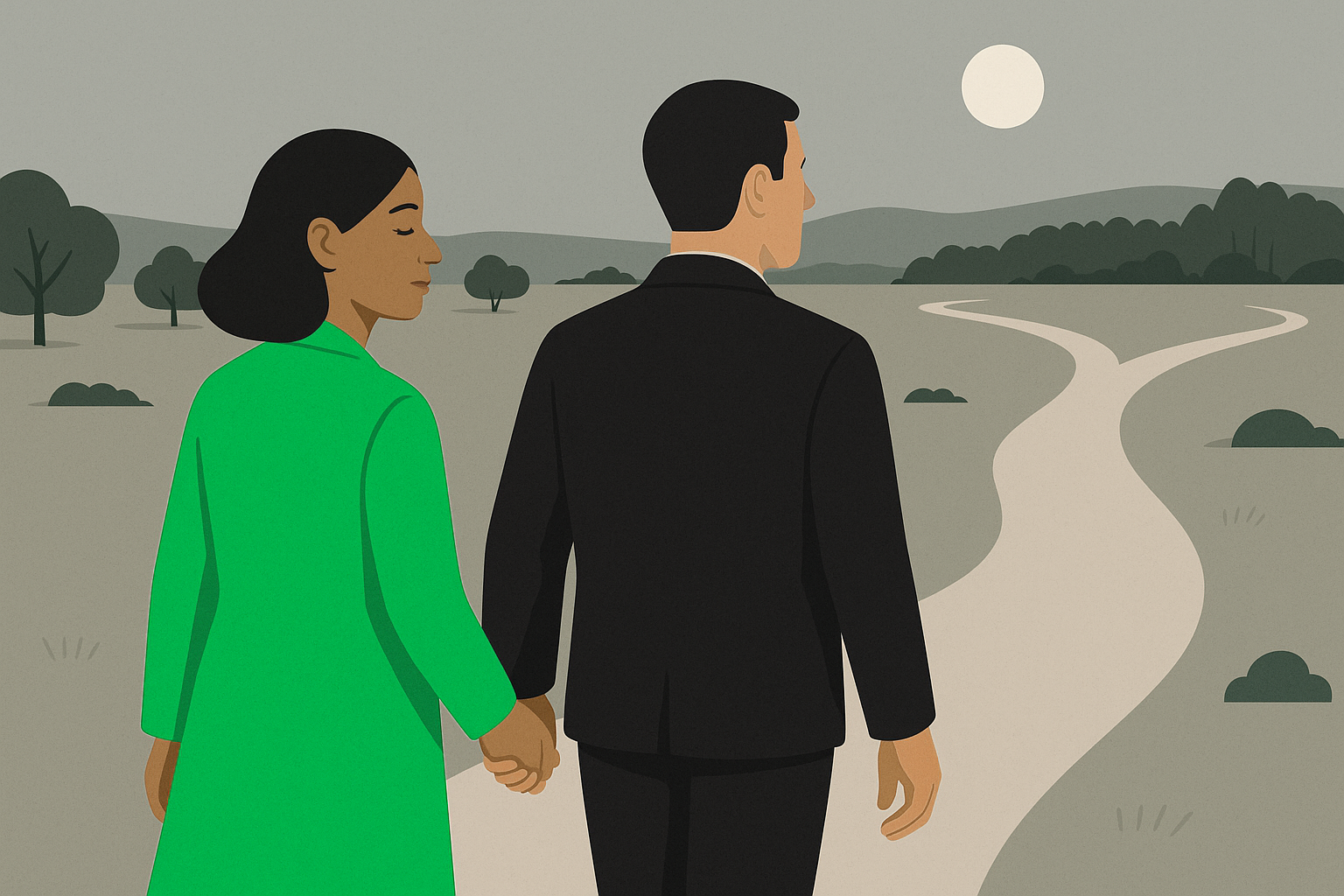
I grew up enamored of Choose Your Own Adventure books, and I’ve had a soft spot for interactive fiction ever since. To me they were the predecessor to video games: the reader got some agency, some say in where the story went. I wanted a dash of that in Sojourn, without the gimmickry and without breaking the spell a bedtime story runs on. So the choices went quiet. They’re soft, they’re spaced out, and the reader makes them silently. Nothing stops. Nothing announces itself. What it turned into is a system that treats the reader as something closer to a performer, handing them everything they need to conduct the evening.
Underneath, it’s doing genuinely complicated work: branching narrative, a world that remembers what came before, sound that knows where you are. All of that complexity exists so the human part can stay dead simple. One voice, in a dark room, reading to someone they love. The most sophisticated thing I knew how to build, in service of the oldest thing there is.
Six Words
Every session opens the same way. Before the story starts, the reader says six words out loud. This happened, or it will.
It’s a small impossibility that somehow makes complete sense. It sets the story outside of time — this already happened to someone, or it’s going to happen to you, or both — and it closes the distance between the tale and the person hearing it without ever announcing that it’s doing so. Every storytelling tradition on earth has a phrase like this. “Once upon a time.” The Irish Fadó, fadó, long, long ago. The Turkish Bir varmış, bir yokmuş, once there was, once there wasn’t. The Arabic Kan ya ma kan, there was, or maybe there wasn’t. They aren’t really openings. They’re doorways. They tell the listener the rules are different in here, time works differently, you can let go now.
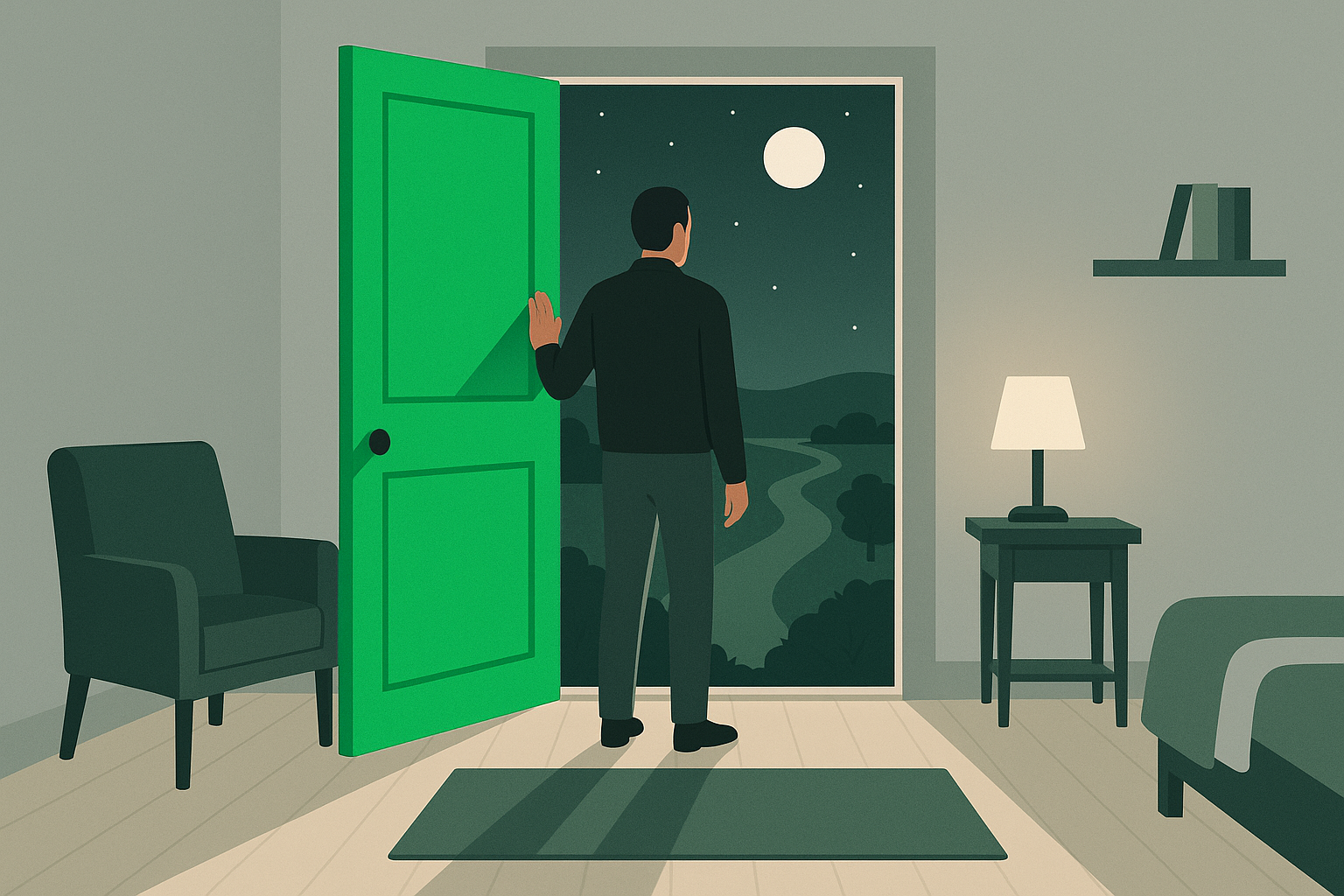
Said the same way every night, the phrase becomes something past a doorway. It becomes a cue. The reader speaks those six words, and over weeks the listener’s body learns what they mean: the day is over, I’m here, this next part is for you. The words stop being a preamble and turn into a small recurring act of care, the verbal equivalent of pulling a blanket up to someone’s chin. That’s most of what a ritual is. A thing you do the same way, on purpose, so the other person can stop bracing and just receive it.
Sojourn is on the iOS App Store now, and one of my favorite stories is up complete on the web, no install, no account. That isn’t why I wrote this, though. The experiment I’d actually ask you to run is simpler than that.
Tonight, read something to someone you love. A picture book, a poem, a chapter of whatever’s on the nightstand, or something you make up on the spot. Read it slowly, in the dark, like you mean it, and watch what happens in the room. Sojourn is just my attempt to make that easy to do on an ordinary Tuesday, with material written for exactly that purpose. You don’t need me, or the app, to try the thing it’s built around. You need someone willing to close their eyes, and a voice they trust to carry them somewhere.
The rabbit becomes Real because somebody loved it long enough to wear it out. I don’t know the word for what happens to a person who gets read to in the dark, night after night. I’ve sat in the room while it worked, though, and it looked like the same thing.
Want more like this?
Subscribe to get new posts from the lab delivered to your inbox.
or grab the RSS feed